
INDEPENDENT PEPTIDE & GLP-1 EDUCATION
Peptides,
explained properly.
A free reference for peptides and GLP-1s, written with women in mind. Understand the evidence, check the claims, and find better questions for your clinician.
New here? Start with the four-minute guide
Look up a compound



Compare the evidence
The 2am questions
Types of peptides by goal
Semaglutide and tirzepatide have named FDA-approved products. Retatrutide and survodutide remain investigational. AOD-9604 did not establish weight-loss efficacy in its largest reviewed trial.
See weight loss peptides Recovery & healingBPC-157, TB-500 and KPV are promoted for recovery, but the reviewed evidence does not establish site-targeted healing, a beginner treatment, or a validated combination protocol.
See recovery peptidesGHK-Cu has limited, product-specific topical studies; those findings do not establish systemic injections. Melanotan II tanning products are unapproved and carry regulator warnings.
See beauty peptides LongevityCell-line telomere findings and biomarker changes do not prove human life extension. Elamipretide has a narrow approved product and indication that does not validate general longevity use.
See longevity peptides Muscle & GHCJC-1295/ipamorelin is not a validated sleep, recovery, or body-composition stack. Tesamorelin has product-specific approval for excess abdominal fat in adults with HIV-associated lipodystrophy.
See muscle peptides Focus & moodSelank has a small medazepam-comparator study, not a placebo trial. Semax evidence comes from limited regional neurologic research. Adamax lacks compound-specific human evidence.
See cognitive peptidesFour categories that must not be blurred
An FDA-approved product, a lawful patient-specific compounded preparation, a clinical-trial product, and a grey-market research vial have different evidence, quality controls, instructions, and legal status.
Start with status, not a protocol
How do peptides work?
A peptide is a short amino-acid chain, but mechanism, absorption, benefit, risk, and route are compound and formulation specific. Cell and animal findings can motivate human research; they cannot be rewritten as demonstrated patient outcomes. Every profile identifies the evidence type and product status.
This compound index includes approved medicines, investigational candidates, preclinical substances, and one non-peptide coenzyme. Inclusion is not endorsement.
Brand new? Start with the 4-minute guide →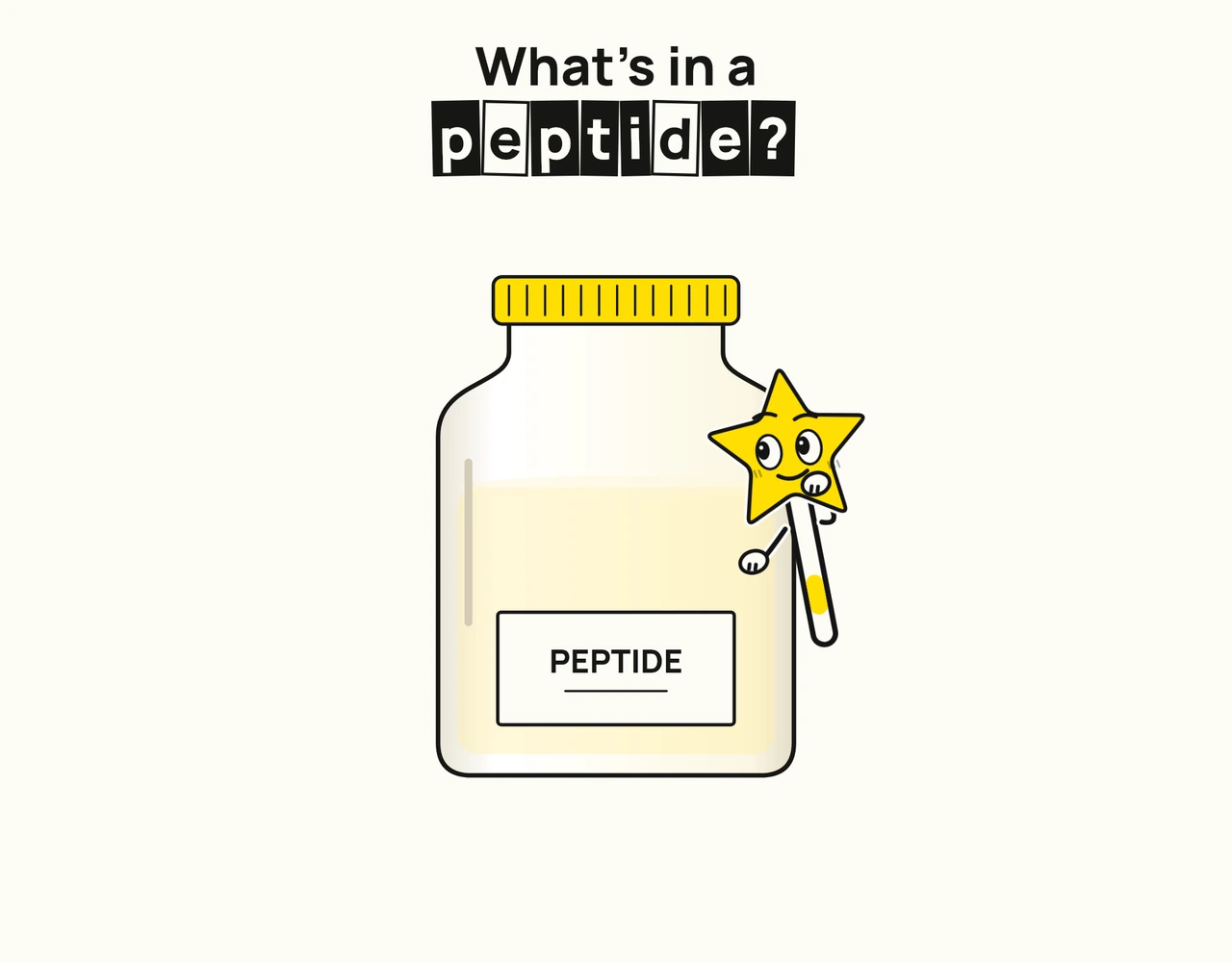
Watch the 40-second peptide story · No sound.
Read the story
- What’s in a peptide?
- Peptides are made of amino acids Tiny building blocks your body already uses.
- Link them into a short chain. That’s a peptide. Your body makes peptides too.
- The chain can bend and fold. It’s still the same chain.
- Its shape helps it fit. Like a key fitting a lock.
- Your cells have tiny receivers. They’re called receptors. Some peptides attach here.
- It attaches. The cell gets a message. That message can change what the cell does.
- For example, insulin says: “Let sugar in.” Your cells use that sugar for energy.
Arithmetic after the prescription.
The calculator converts a prescribed dose and verified concentration into volume. It does not choose a drug, dose, diluent, route, schedule, or preparation method.
Open the arithmetic toolThen calculate.
From the blog
All posts →FREE DOWNLOADS
Keep a copy. Send it to her.
You see potential.
The situationship audit, peptide dating profiles and questions to take to a clinician.
Get the guide →THE SUPPLIER CHECKLISTCheck the claims.
A printable checklist for the questions a supplier should be able to answer.
Get the checklist →Both PDFs are free with your email. The wiki is always open.